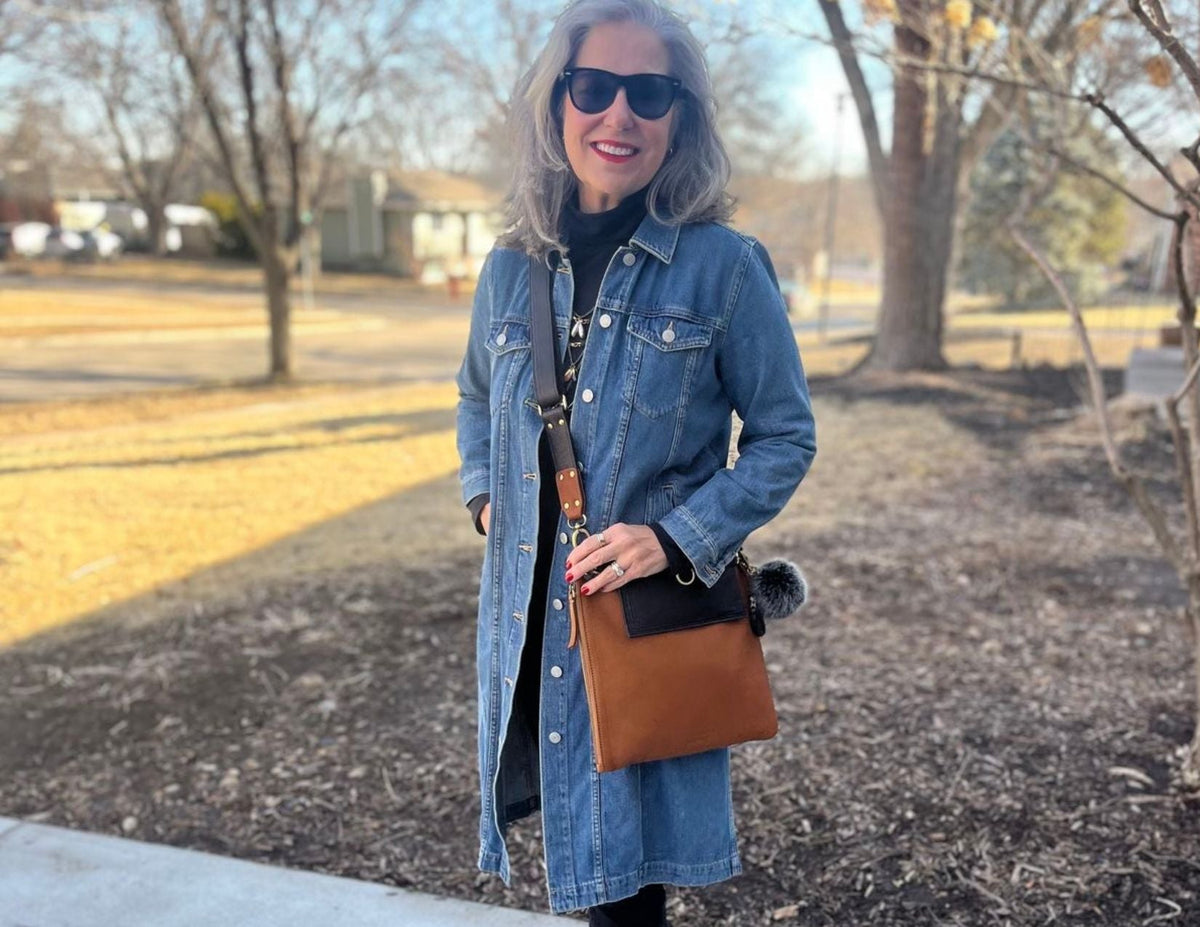
For those of you I haven’t had the opportunity to meet in person or virtually, I’m Molly, CEO of Sapahn. This month, I’m stepping into The Bridge to share something incredibly near and dear to my heart.
While Brooke carries the creative brain of Sapahn, I love to live in the numbers.
I dream of dashboards, spreadsheets, and data-driven decisions. Numbers tell stories. They help us understand where we’ve been, where we’re going, and what we can do differently.
So naturally, when I sat down to write this month’s Bridge, my mind went straight to a number.
1 in 8.
One in eight women will be diagnosed with breast cancer during their lifetime.
This past weekend, I was sitting with a group of girlfriends, and that statistic kept running through my head.
One of us.
One of the women sitting around that table, laughing, talking about our kids, our careers, and everything in between.
It’s a statistic I’ve heard countless times. But after the last 10 years, it hits a little differently.
I was just 26 years old when I had my first surgery to remove tumors from my breasts. Since then, my life has included more mammograms, needle biopsies, surgeries, consultations, and days waiting for pathology results than I care to count.
A little over a year ago, I was diagnosed with a borderline phyllodes tumor, a rare type of breast tumor that accounts for less than 1% of all breast tumors.
Less than 1%.
For someone who loves numbers, that’s one statistic I never imagined becoming part of.
The diagnosis resulted in a partial mastectomy on my left side. Given my history of recurring tumors and my age, my oncologist recommended considering a preventative mastectomy.
And you might be surprised by my reaction.
I was excited.
Of course, I was nervous about another surgery and recovery. But after nearly a decade of reacting to whatever came next, I finally felt like I had an opportunity to take control of my future.
To make a decision instead of waiting for one to be made for me.
Unfortunately, my insurance company didn’t see it the same way.
Because the procedure was considered preventative, coverage was denied. With the support and advocacy of my oncologist, I went through the appeals process, but ultimately the surgery wasn’t covered. Paying for it privately simply wasn’t financially possible.
There’s an entirely different conversation to be had about the barriers women face when trying to take preventative measures with their health. Maybe that’s a Bridge for another month.
But for now, my story continues where it started.
Waiting.
Waiting to see if another mass develops. Waiting to see what the next scan might show. Waiting to find out whether another surgery will become necessary.
At 36 years old, I sometimes wonder if this is simply what the rest of my life will look like.
Am I just sitting around waiting for breast cancer to happen?
Or am I supposed to feel grateful? Grateful that another tumor hasn’t brought news requiring treatment beyond surgery. Grateful for another reassuring pathology report. Grateful that, once again, I can return to my regularly scheduled life.
And the answer is, of course, I’m grateful.
Incredibly grateful.
But I’ve learned that you can be grateful for the outcome and still be exhausted by the journey.
Because what doesn’t show up in a medical chart are all the moments life has to pause.
The appointments you rearrange your schedule for. The days spent waiting for a phone call. The plans you hesitate to make because you’re not sure what the next few weeks will hold.
And perhaps the hardest part is that even when you receive good news, the waiting doesn’t necessarily end.
Becoming a mother has added an entirely different layer to that uncertainty.
I have a six-year-old daughter. And as much as I think about my own future, I find myself thinking about hers even more.
What answers can I find today? What questions should I be asking? What resources and medical knowledge can I put in her toolbox so that someday, if she ever faces something similar, she feels more prepared than I did at 26?
I hope she never needs any of it.
But I want her to have it anyway.
I can’t protect her from everything life might bring. No mother can. But if I can give her more answers, more knowledge, and more confidence to advocate for herself, then maybe I can make some part of her journey a little easier.
And maybe that’s what has changed most for me over the last decade.
I used to think about my health in terms of the next appointment, the next scan, or the next result. Now I think about the years ahead. The birthdays, the milestones, and all the ordinary moments I want to be here for.
As I think about Breast Cancer Awareness Month, I keep coming back to those women sitting around the table with me.
The women we love. The women we work beside. The women raising children, building businesses, caring for aging parents, and showing up for everyone around them.
We rarely know everything another woman is carrying.
And sometimes the woman who appears to have everything under control is quietly waiting for a phone call that could change everything.
So this October, I hope you’ll make a little space for yourself.
Ask the questions. Have the conversations. Know your family history. Talk to your healthcare provider about your personal risk and the screenings that are right for you. And if something doesn’t feel right, don’t be afraid to advocate for answers.
But also, check on the women around you.
Because sometimes what we need most isn’t another statistic, another reminder, or another piece of advice.
Sometimes we just need someone to sit beside us while we wait.
I started this Bridge with numbers because numbers are where I feel most comfortable.
But after 10 years of scans, biopsies, surgeries, and uncertainty, I’ve learned that not everything can be predicted. Not everything can be controlled. And some of the most important things in life will never fit into a spreadsheet.
I don’t know what my next scan will show. I don’t know what decisions I’ll have to make in the years ahead.
But I do know that I want to spend as much of my life as possible living, rather than waiting.
And more than anything, I hope my daughter grows up in a world where women have more answers, more options, and fewer years spent wondering what comes next.
With love,
Molly
CEO, Sapahn